
Nutrition
What 500 Calories Looks Like in Indian Food: 12 Everyday Plates Compared
See what approximately 500 calories looks like across 12 everyday Indian meals, including roti, dal, rice, paneer, dosa, chicken and biryani.
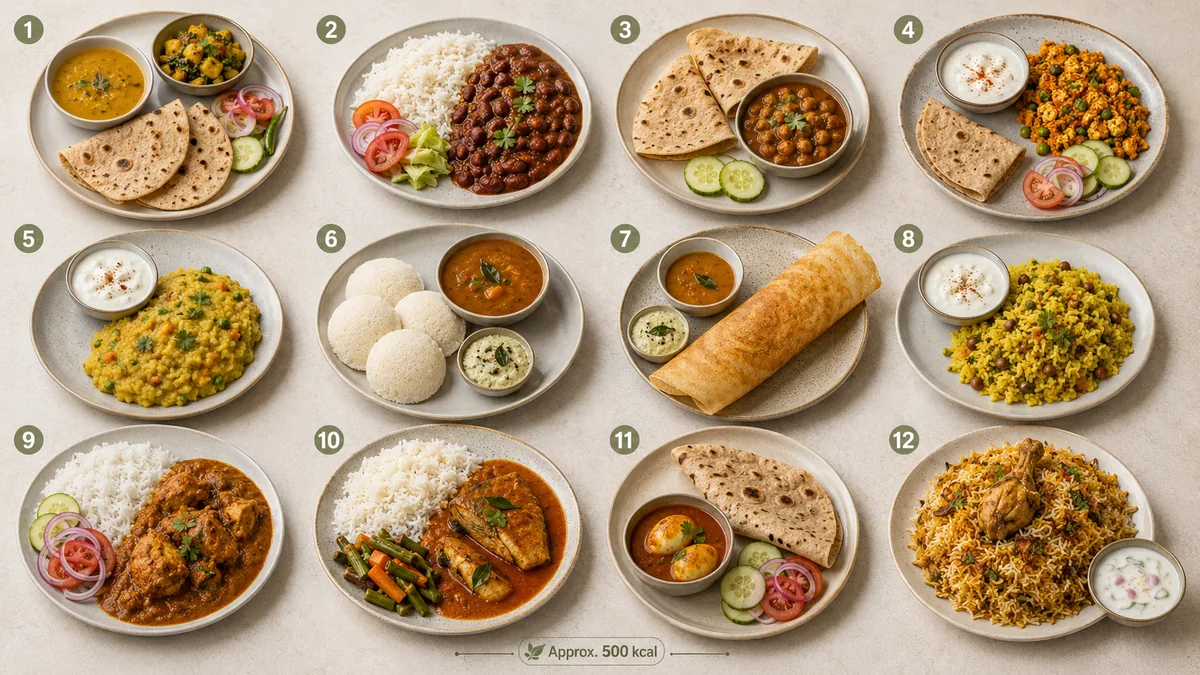
It could be a filling meal containing roti, dal, vegetables and salad. It could also be a much smaller portion of biryani, paneer curry or masala dosa when the recipe contains more oil, ghee, coconut, cream or nuts.
The number of calories alone does not tell you whether a meal is balanced or satisfying. Protein, fibre, vegetables, cooking fat and portion size determine how filling and nutritionally complete the plate is.
The examples below represent approximate home-cooked portions, not laboratory-tested recipes. Actual calories can vary significantly according to ingredients, oil and preparation method.
Before comparing the plates
The estimates in this article assume:
- Small rotis prepared without ghee
- Standard measuring cups rather than oversized bowls
- Moderate quantities of cooking oil
- Plain rice without added butter or ghee
- Unsweetened curd and beverages
- Home-cooked gravies rather than restaurant-style preparations
- Salad without a high-calorie dressing
Indian Food Composition Tables provide nutritional information for hundreds of commonly consumed Indian foods, with values generally expressed per 100 grams of edible food. However, complete dishes such as rajma, biryani and paneer curry must still be estimated from their individual ingredients and serving sizes. (ICMR National Institute of Nutrition)
Treat each plate as a visual portion guide rather than an exact nutritional prescription.
Twelve Indian plates containing approximately 500 calories
| Plate | Example serving | Estimated calories |
|---|---|---|
| 1. Roti, dal and sabzi | Two small rotis, one cup dal, one cup vegetable sabzi and salad | Approximately 500 kcal |
| 2. Rajma rice | One cup rajma, one cup cooked rice and cucumber salad | Approximately 500 kcal |
| 3. Chole and roti | One cup chole, two small rotis and sliced cucumber | Approximately 500 kcal |
| 4. Paneer bhurji plate | Approximately 100 g paneer bhurji, one roti, a small portion of curd and salad | Approximately 520 kcal |
| 5. Vegetable khichdi | Two cups vegetable dal khichdi with approximately 150 g plain curd | Approximately 500 kcal |
| 6. Idli and sambar | Four medium idlis, one-and-a-half cups sambar and two tablespoons chutney | Approximately 500 kcal |
| 7. Masala dosa plate | One medium masala dosa with sambar and a small amount of chutney | Approximately 520 kcal |
| 8. Poha and curd | Two cups vegetable poha with peanuts and approximately 150 g curd | Approximately 500 kcal |
| 9. Chicken curry and rice | One cup chicken curry, one cup cooked rice and salad |
These totals are rounded estimates. A difference of 50–150 calories is possible even when two meals appear visually identical.
Plate 1: Roti, dal, sabzi and salad
Example plate:
- Two small rotis
- One cup dal
- One cup vegetable sabzi
- Cucumber, tomato and onion salad
Estimated total: Approximately 500 calories
This is one of the most balanced examples because it combines cereal, pulses and vegetables.
The dal contributes protein and fibre, while the vegetables and salad increase the volume of the meal without requiring a large quantity of calories.
The largest variables are the size of the rotis and the amount of oil or ghee used in the dal and sabzi.
Plate 2: Rajma rice
Example plate:
- One cup rajma
- One cup cooked rice
- Cucumber and onion salad
Estimated total: Approximately 500 calories
Rajma rice can fit comfortably into a calorie-controlled diet. The difficulty usually comes from oversized rice portions rather than from the meal itself.
A deep restaurant bowl may contain two or three cups of rice before the rajma is added. Measuring the cooked rice separately makes the portion easier to understand.
Plate 3: Chole and roti
Example plate:
- One cup chole
- Two small rotis
- Sliced cucumber
Estimated total: Approximately 500 calories
Chole provides plant protein and fibre, but its calories can increase when the recipe contains generous quantities of oil.
Restaurant-style chole may also contain more oil than a typical home-cooked version, meaning a visually similar serving may contain substantially more calories.
Plate 4: Paneer bhurji, roti and curd
Example plate:
- Approximately 100 g paneer bhurji
- One small roti
- A small serving of curd
- Salad
Estimated total: Approximately 520 calories
Paneer provides protein, but it is also relatively calorie-dense.
ICMR–NIN’s food composition data lists paneer at approximately 1,278 kilojoules per 100 grams, equivalent to roughly 305 calories, before additional oil, butter, vegetables or gravy are included. (ICMR National Institute of Nutrition)
A paneer dish can therefore reach 500 calories with a much smaller serving than a dal-and-vegetable plate.
Plate 5: Vegetable dal khichdi and curd
Example plate:
- Two cups vegetable dal khichdi
- Approximately 150 g plain curd
Estimated total: Approximately 500 calories
Khichdi can be a filling meal because cooked rice and dal absorb water and create considerable volume.
Its calorie content depends heavily on the ratio of rice to dal and the amount of ghee added during or after cooking.
Adding vegetables increases the meal’s volume and variety without requiring a larger rice portion.
Plate 6: Four idlis with sambar and chutney
Example plate:
- Four medium idlis
- One-and-a-half cups sambar
- Two tablespoons chutney
Estimated total: Approximately 500 calories
Idlis are steamed, but that does not mean the entire meal is automatically low in calories.
Four idlis can fit into a 500-calorie plate, particularly when they are served with a generous portion of sambar. Coconut or peanut chutney should be measured because its calories are concentrated in a relatively small serving.
Plate 7: Masala dosa, sambar and chutney
Example plate:
- One medium masala dosa
- One serving of sambar
- A small serving of chutney
Estimated total: Approximately 520 calories
A masala dosa can contain around 500 calories, but the total varies widely.
The calorie count depends on:
- The diameter and thickness of the dosa
- The amount of oil used on the pan
- The quantity of potato filling
- Whether butter or ghee is added
- The type and quantity of chutney
A large restaurant butter masala dosa can contain considerably more than the example shown here.
Plate 8: Vegetable poha with curd
Example plate:
- Two cups vegetable poha
- A measured portion of peanuts
- Approximately 150 g plain curd
Estimated total: Approximately 500 calories
Poha can appear light because the flattened rice is thin and soft, but a large bowl can still provide a substantial quantity of carbohydrates.
Peanuts add flavour, protein and texture, but they also increase the calories quickly. Measure them instead of adding them directly from the packet.
Plate 9: Chicken curry and rice
Example plate:
- One cup chicken curry
- One cup cooked rice
- Salad
Estimated total: Approximately 510 calories
Chicken curry and rice can provide a relatively high-protein meal when the curry uses lean chicken and a moderate amount of oil.
Creamy gravies, chicken skin, coconut milk, butter and extra oil can significantly increase the total without making the plate look larger.
Plate 10: Fish curry and rice
Example plate:
- One cup fish curry
- Approximately one-and-a-quarter cups cooked rice
- A small portion of cooked vegetables
Estimated total: Approximately 500 calories
Fish curry calories depend on the type of fish and the gravy.
A light tomato- or tamarind-based curry will generally differ from a coconut-rich or heavily fried preparation. Fried fish served with curry should be calculated differently from fish cooked directly in the gravy.
Plate 11: Two-egg curry and roti
Example plate:
- Curry containing two eggs
- Two small rotis
- Salad
Estimated total: Approximately 480 calories
Egg curry can create a convenient, protein-containing meal without requiring a large portion.
The gravy remains the main uncertainty. A tomato-and-onion gravy prepared with moderate oil may fit easily into this estimate, while a creamy restaurant gravy may not.
Plate 12: Chicken biryani and raita
Example plate:
- Approximately one-and-a-half cups chicken biryani
- A small bowl of raita
Estimated total: Approximately 520 calories
Biryani usually provides less visible food volume for 500 calories than dal, vegetables and roti.
Rice, meat, oil, ghee, fried onions and nuts can all contribute calories. Large takeaway containers may hold several times the serving shown in this example.
Serve the biryani in a measured bowl before eating instead of eating directly from the container.
Why two similar-looking plates can have different calories
1. Cooking oil is difficult to see
Oil can disappear into dal, sabzi, curry and rice. Two servings may look almost identical even when one recipe contains much more cooking fat.
ICMR–NIN’s dietary guidance emphasises controlling added fats and identifies excessive added fat as a major contributor to energy-dense foods. (ICMR National Institute of Nutrition)
2. Bowl and roti sizes are inconsistent
“One bowl” is not a reliable serving measurement.
A household katori may contain less than half the quantity of a restaurant curry bowl. Rotis can also vary substantially in diameter, flour weight and thickness.
Use the same bowl or measuring cup regularly when learning your normal portions.
3. Restaurant food is commonly richer
Restaurants may use additional oil, butter, cream, sugar or nuts to improve texture and flavour.
Do not assume that a restaurant portion contains the same calories as your home-cooked version simply because the dish has the same name.
4. Water and fibre increase food volume
Dal, vegetables, salad, sambar and lightly prepared curries can provide more plate volume because they contain water and fibre.
WHO recommends eating a varied diet that includes vegetables, fruit, pulses and whole grains rather than judging food quality only by calories. (World Health Organization)
5. Protein can improve the structure of the meal
Meals containing dal, rajma, chole, curd, paneer, eggs, chicken or fish generally provide more protein than plates built mainly around rice, bread or potatoes.
A 500-calorie meal does not need to be extremely high in protein, but it should normally include a meaningful protein source.
Which 500-calorie plates may feel most filling?
Among the examples, the plates likely to provide the greatest food volume include:
- Roti, dal, sabzi and salad
- Vegetable khichdi with curd
- Idli with a generous serving of sambar
- Rajma rice with salad
- Chole, roti and cucumber
The plates that may provide less visible volume include:
- Paneer bhurji
- Masala dosa
- Biryani
- Oil-rich restaurant curries
This does not make the smaller-looking meals unhealthy. It means portion awareness becomes more important when a dish contains concentrated sources of fat.
Is a 500-calorie meal good for weight loss?
It can be, but 500 calories is not a universal meal target.
Your appropriate meal size depends on:
- Your total daily calorie requirement
- How many meals and snacks you eat
- Your body size
- Your activity level
- Your weight-management goal
- Your medical and nutritional needs
Weight loss requires a sustained calorie deficit across days and weeks. Physical activity can contribute, but reducing calorie intake usually plays the larger role in initial weight loss. (CDC)
A person eating three meals per day may structure their calories differently from someone eating two meals and several snacks.
Three rules for building a better 500-calorie Indian plate
1. Start with a protein source
Choose dal, rajma, chole, soy, tofu, paneer, curd, eggs, chicken or fish.
This makes it easier to create a complete meal rather than spending most of the calories on rice or roti alone.
2. Add vegetables before increasing rice or roti
Use cooked vegetables and salad to add volume, fibre and variety.
ICMR–NIN’s food guidance promotes obtaining nutrients through multiple food groups rather than relying heavily on a single staple. (ICMR National Institute of Nutrition)
3. Measure calorie-dense ingredients
Pay particular attention to:
- Oil and ghee
- Paneer
- Coconut
- Peanuts and other nuts
- Cream
- Fried toppings
- Chutney
- Large rice servings
You do not have to remove these foods. Measure them so they fit your total calorie target.
Frequently Asked Questions
Are two rotis always the same number of calories?
No. Roti calories depend on the amount of flour, diameter, thickness and whether oil or ghee is added. Two small rotis may contain fewer calories than one large restaurant tandoori roti or butter roti.
How many calories are in one bowl of dal?
There is no single answer because bowl size, dal variety, consistency and tempering differ. A thick dal containing generous oil or ghee may provide considerably more calories than a thinner home-cooked dal in a small katori.
Is rice more fattening than roti?
Neither food independently causes fat gain. Body weight is affected by total calorie intake over time. Rice and roti can both fit into a balanced diet when their portions match your needs.
Can I eat biryani while trying to lose weight?
Yes. Serve a measured portion, add raita or salad and account for the oil, rice and meat in your daily intake. Avoid treating a large restaurant container as a single serving.
Which Indian meal is best for weight loss?
There is no single best meal. A practical weight-loss meal generally combines a controlled portion of rice or roti with protein, vegetables and a measured amount of cooking fat.
Should I trust calorie values from fitness apps?
Use them as estimates. Entries may be created from different recipes, brands and portion sizes. Compare the listed serving weight with the food actually on your plate rather than selecting the first result with the correct dish name.
The bottom line
Five hundred calories of Indian food can look like a large balanced plate or a relatively small serving of an oil-rich dish.
The most important differences come from:
- Portion size
- Cooking oil and ghee
- Protein content
- Vegetable and fibre content
- Home-cooked versus restaurant preparation
You do not need to stop eating rice, roti, paneer, dosa or biryani to manage your weight.
Learn what your usual portions look like, measure calorie-dense ingredients and judge your progress using consistent habits rather than expecting every food entry to be perfectly accurate.
Use Eleviy to scan your meals, estimate calories and macros, compare portion sizes and adjust your intake according to your weekly progress.
This article is for general education and is not a personalised medical or nutritional prescription.