
Nutrition
How to Get 30 Grams of Protein in Every Meal: 20 Indian Foods and Meal Combinations
Learn how to build Indian meals with approximately 30 grams of protein using paneer, dal, soy, eggs, chicken and fish. Includes 20 practical combinations.
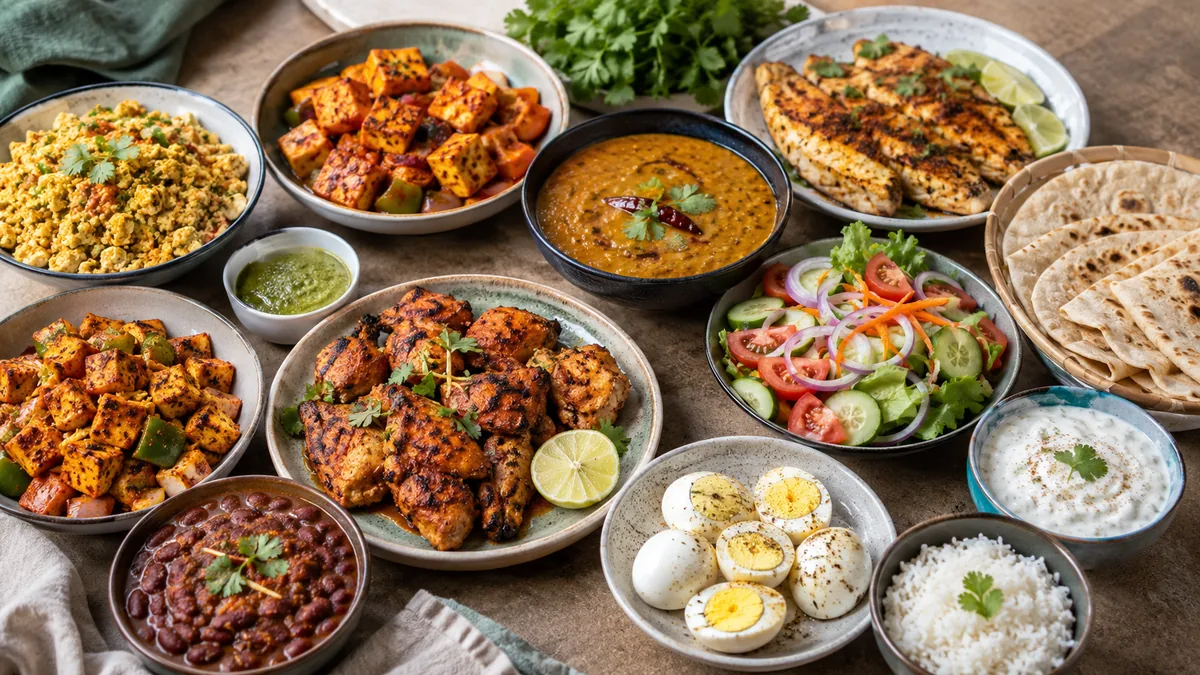
Practical examples include:
- Paneer-stuffed chilla with milk
- Paneer curry with mixed dal
- Soybean curry with dal and roti
- Four eggs with milk
- Chicken curry
- Fish tikka with an egg
- Prawn curry with an egg
Thirty grams is a useful meal-building target, particularly for active adults, but it is not a universal requirement or a strict protein-absorption limit. Your ideal amount depends on your body weight, age, activity, total daily intake and health.
Is 30 grams of protein per meal necessary?
Not for everyone.
ICMR–National Institute of Nutrition sets the recommended dietary allowance for healthy Indian adults at approximately 0.83 g of protein per kilogram of body weight per day when the diet contains good-quality protein. It notes that people relying heavily on lower-quality cereal-based diets may need around 1 g/kg/day. (nin.res.in)
That means a sedentary 60 kg healthy adult may have a baseline requirement near 50 g per day—not 90 g.
However, higher intakes are frequently used by people who perform resistance training, want to build muscle or are trying to retain lean mass during fat loss. A sports-nutrition position statement describes servings of approximately 20–40 g of high-quality protein, or roughly 0.25–0.40 g/kg per feeding, as a practical range around training and muscle-protein synthesis. (PubMed)
A separate evidence review proposed approximately 0.4 g/kg per meal across four meals when attempting to reach a daily intake near 1.6 g/kg. For a 75 kg adult, 0.4 g/kg equals 30 g per meal. (PubMed)
Simple calculation
Protein per meal = body weight in kilograms × approximately 0.25–0.40
Examples:
| Body weight | Lower practical amount | Higher practical amount |
|---|---|---|
| 50 kg | 12.5 g | 20 g |
| 60 kg | 15 g | 24 g |
| 70 kg | 17.5 g | 28 g |
| 75 kg | 18.75 g | 30 g |
| 80 kg | 20 g | 32 g |
| 90 kg | 22.5 g | 36 g |
These are meal-planning estimates, not personalised medical prescriptions.
Can your body absorb more than 30 grams?
Yes.
The body does not suddenly stop absorbing protein after 30 g. The more useful question is how much protein from a meal is used for a particular purpose, such as stimulating muscle-protein synthesis.
Research indicates that the response varies according to meal size, protein quality, body size, age, training and the rest of the diet. A controlled study published in 2023 found that a large protein serving continued to increase amino-acid availability and whole-body protein balance rather than simply being discarded. (PubMed)
Therefore, treat 30 g as a convenient meal-building target—not a biological ceiling.
20 Indian meals providing approximately 30 grams of protein
The following estimates are based on typical recipe servings and food-composition references. The Indian Nutrient Databank contains nutrient estimates for more than 1,000 common Indian recipes using sources that include the Indian Food Composition Tables. Actual protein will vary by recipe, brand, serving size, water content and the quantity of the main protein ingredient. (anuvaad.org.in)
Vegetarian meal combinations
| # | Meal combination | Approximate protein | | -: | --------------------------------------------------------------- | ------------------: | | 1 | Paneer-stuffed chilla with 200 ml milk | 30–32 g | | 2 | Two servings of stuffed moong dal chilla | 30–32 g | | 3 | Paneer curry with one serving of panchmel dal | 29–31 g | | 4 | Besan gatte curry with 300 ml milk | 29–31 g | | 5 | Kadhai paneer, soybean curry and one roti | 28–31 g | | 6 | Paneer-filled dosa with 300 ml milk | 29–31 g | | 7 | Two servings of soy-chunk curry with milk | 29–33 g | | 8 | Two servings of kabuli chana with three rotis and a little curd | 29–32 g | | 9 | Two portions of a moderate paneer curry | 30–32 g | | 10 | Soybean curry, panchmel dal and two rotis | 29–32 g |
For context, the Indian Nutrient Databank estimates approximately 24.3 g per serving for paneer-stuffed chilla, 15.9 g for stuffed moong dal chilla, 15.8 g for paneer curry, 13.9 g for panchmel dal and 19.8 g for besan gatte curry. (anuvaad.org.in)
These examples also show why ordinary portions of dal or rajma alone often do not reach 30 g. One reference serving of washed moong dal contains approximately 7.4 g, while a reference serving of rajma curry contains approximately 7.1 g. Reaching 30 g usually requires a larger portion or the addition of paneer, soy, curd or milk. (anuvaad.org.in)
Non-vegetarian meal combinations
| # | Meal combination | Approximate protein | | -: | --------------------------------------------- | ------------------: | | 11 | One substantial serving of chicken curry | 29–31 g | | 12 | One serving of creamy chicken with vegetables | 29–31 g | | 13 | Handi chicken with one roti | 30–32 g | | 14 | One serving of Afghani chicken with salad | 29–31 g | | 15 | Chicken yakhni with two rotis | 30–32 g | | 16 | Hariyali fish tikka with one boiled egg | 30–33 g | | 17 | Prawn curry with one boiled egg | 30–32 g | | 18 | One serving of chicken pulao with salad | 38–42 g | | 19 | Four boiled eggs with 150–200 ml milk | 30–33 g | | 20 | Three portions of egg bhurji with 250 ml milk | 29–31 g |
Indian recipe data estimates approximately 29.2 g per serving for chicken curry, 28.6 g for handi chicken, 29.7 g for Afghani chicken, 26.9 g for chicken yakhni, 25 g for hariyali fish tikka and 24.4 g for prawn curry. (anuvaad.org.in)
One boiled egg contains approximately 6.7 g of protein in the Indian Nutrient Databank, while cow’s milk contains approximately 3.3 g per 100 g in Indian food-composition data. (anuvaad.org.in)
The easiest way to build a 30 g protein meal
Use one of these three formulas.
Formula 1: One large primary protein
Build the meal around a substantial portion of:
- Chicken
- Fish
- Prawns
- Paneer
- Tofu
- Soybeans or soy chunks
Add vegetables and an appropriate quantity of rice or roti.
Formula 2: Two moderate protein sources
Combine two foods that each contribute approximately 10–20 g:
- Paneer and dal
- Soybean curry and dal
- Eggs and milk
- Eggs and paneer
- Fish and egg
- Prawns and egg
- Chana and paneer
This is often the easiest approach for vegetarian meals.
Formula 3: Upgrade an existing Indian meal
Instead of changing the entire dish, add one protein component:
| Existing meal | Protein upgrade |
|---|---|
| Poha | Add eggs, paneer or thick curd |
| Upma | Add soy granules and curd |
| Dal-rice | Add paneer, tofu or eggs |
| Rajma-rice | Add hung curd or paneer |
| Roti-sabzi | Replace part of the sabzi with paneer, tofu or chicken |
| Idli-sambar | Increase sambar and add eggs or curd |
| Dosa | Add paneer, egg or chicken filling |
| Salad | Add tofu, paneer, eggs, chicken or prawns |
A sample day with approximately 100 grams of protein
Breakfast: approximately 30 g
Paneer-stuffed chilla with milk.
Lunch: approximately 30 g
Paneer curry with panchmel dal and vegetables.
Snack: approximately 10 g
Roasted chana with curd or milk.
Dinner: approximately 30 g
Chicken curry, fish tikka or soybean curry with vegetables.
Daily total: approximately 100 g
This is only an example. Someone whose daily target is 60–70 g would not need 30 g in all three main meals.
Vegetarian meals: focus on combinations
Indian vegetarian diets can provide sufficient protein, but meal construction matters.
ICMR–NIN recommends dietary variety and includes pulses, nuts, milk, curd, eggs, fish and meat—according to dietary preference—as useful protein-containing food groups. (nin.res.in)
For vegetarian meals, combine:
- Pulses with dairy
- Pulses with soy
- Cereals with pulses
- Paneer or tofu with dal
- Besan with paneer
- Chana with curd
You do not need to combine every amino acid in one perfectly calculated meal. The overall quality and variety of the diet across the day are more important.
Protein is not the only consideration
A meal containing 30 g of protein is not automatically balanced or appropriate for fat loss.
For example:
- Paneer dishes may also contain substantial fat.
- Creamy chicken can contain additional butter or cream.
- Nut-based meals can be calorie-dense.
- Fried protein foods may contribute considerable oil.
- Large servings of dal and chana can also add significant carbohydrates and total calories.
When fat loss is the goal, track:
- Total calories
- Protein
- Cooking oil
- Portion size
- Fibre
- Vegetables
- Hunger and satisfaction
Choose grilled, roasted, steamed or lightly cooked foods more often than deeply fried preparations.
Common mistakes when tracking protein
1. Confusing raw and cooked weights
Cooking changes water content. One hundred grams of raw chicken and 100 g of cooked chicken do not represent the same starting quantity.
Select the correct raw or cooked entry in your food tracker.
2. Assuming every recipe has the same nutrition
Paneer curry made with 80 g of paneer will differ from one made with 150 g. Restaurant gravies may also contain more oil, cream or nuts than homemade dishes.
3. Counting rice and roti as the main protein source
Rice and roti contribute some protein, but they should not normally be the foundation of a high-protein meal.
4. Depending only on a small bowl of dal
A normal serving of dal is nutritious, but it may provide considerably less than 30 g of protein. Combine it with paneer, tofu, soy, eggs, chicken or another substantial source.
5. Ignoring total daily intake
Eating 30 g at breakfast does not compensate for very low protein intake throughout the rest of the day. Daily intake and consistency remain important.
Frequently Asked Questions
How can I get 30 grams of protein in an Indian breakfast?
Choose paneer-stuffed chilla with milk, two servings of moong dal chilla, four eggs with milk, or egg bhurji combined with curd or milk.
How much paneer provides 30 grams of protein?
The amount varies by paneer type and brand. In practice, a paneer-based dish may need approximately 150–200 g of paneer or a smaller paneer portion combined with dal, milk or curd. Check the label of the paneer you use.
How many eggs provide 30 grams of protein?
One boiled egg contains approximately 6.7 g of protein in Indian recipe data. Four eggs provide approximately 27 g, so adding a small glass of milk can bring the meal close to 30 g. ([anuvaad.org.in][9])
Can one bowl of dal provide 30 grams of protein?
Usually not. One reference serving of cooked moong dal contains approximately 7.4 g of protein. You would need a much larger portion or another protein source. ([anuvaad.org.in][7])
Is 30 grams of protein suitable for fat loss?
It can be. Protein-rich meals may help you meet daily protein needs while dieting, but fat loss still requires an appropriate overall calorie intake.
Do I need protein powder?
No. The combinations in this guide can reach approximately 30 g using ordinary foods. Protein powder can be convenient, but it is not mandatory.
Should people with kidney disease eat 30 grams at every meal?
Not without personalised advice. People with chronic kidney disease may need to adjust both the quantity and source of protein, and NIDDK recommends discussing protein intake with a healthcare professional or renal dietitian. ([NIDDK][11])
The bottom line
You can get approximately 30 g of protein from an Indian meal by:
- Choosing one substantial primary protein source
- Combining two moderate protein sources
- Upgrading a normal Indian meal with paneer, tofu, soy, eggs, chicken, fish or curd
Thirty grams is a convenient planning target—not a mandatory amount for every person and not an absorption limit.
Focus first on your total daily requirement, then distribute that amount across meals in a way that fits your diet, schedule, training and calorie target.
Eleviy can help you scan Indian meals, review estimated protein and calories, correct serving sizes and monitor whether your daily intake matches your goal.
This article is for general education and does not replace personalised medical or dietary advice.
References
- A Brief Note on
- International society of sports nutrition position stand
- How much protein can the body use in a single meal for ...
- The anabolic response to protein ingestion during recovery ...
- Indian Nutrient Databank (INDB) - Anuvaad Solutions
- Paneer stuffed cheela/chilla - Anuvaad Solutions
- Washed moong dal (Dhuli moong ki dal) - Anuvaad Solutions
- Chicken curry - Anuvaad Solutions